
Urban Honolulu Genealogy Records
Urban Honolulu is the seat of Honolulu County and holds more genealogy records than any other place in Hawaii. Researchers can find birth, death, marriage, probate, land, court, and archive records through a range of state and county offices, all of which are based in or near the city. Whether your family ties go back to the Kingdom era or the early territorial years, Urban Honolulu offers access to materials that span over 170 years of recorded Hawaiian history, with some collections reaching into the 1820s.
Urban Honolulu Quick Facts
Honolulu Vital Records at the State DOH
The Hawaii Department of Health is the main place to get birth, death, and marriage records for Urban Honolulu and the rest of the state. The office is at 1250 Punchbowl Street, Room 103, Honolulu, HI. Walk-in hours run Monday through Friday, 7:45am to 2:30pm. You can call at (808) 586-4539. The first certified copy costs $10. Each added copy ordered at the same time costs $4. If you order online, there is a $2.50 service fee on top of that. Online orders go through the state portal at vitrec.ehawaii.gov/vitalrecords. The DOH main page for vital records is at health.hawaii.gov/vitalrecords.
State law limits who can get a certified copy of a vital record. Under Hawaii Revised Statutes Section 338-18, most records from the last 75 years are restricted to the person named, close family members, legal guardians, or others with a clear legal need. For genealogy work, records that are 75 or more years old are generally open to the public. The DOH has a separate genealogy requests page at health.hawaii.gov/vitalrecords/genealogy where researchers can learn what they need to request older vital records. Statewide vital records in the DOH system go back to July 1909. Records before that date are held at the Hawaii State Archives.
The Hawaii DOH vital records portal covers all islands. For Urban Honolulu researchers, this is the fastest route to get copies. Online orders are processed in order, and certified copies are mailed out.
The screenshot below shows the Hawaii DOH vital records homepage, which is the starting point for ordering birth, death, and marriage records in Urban Honolulu.
The Hawaii Department of Health vital records page is the primary source for certified copies of state vital records used in Urban Honolulu genealogy research.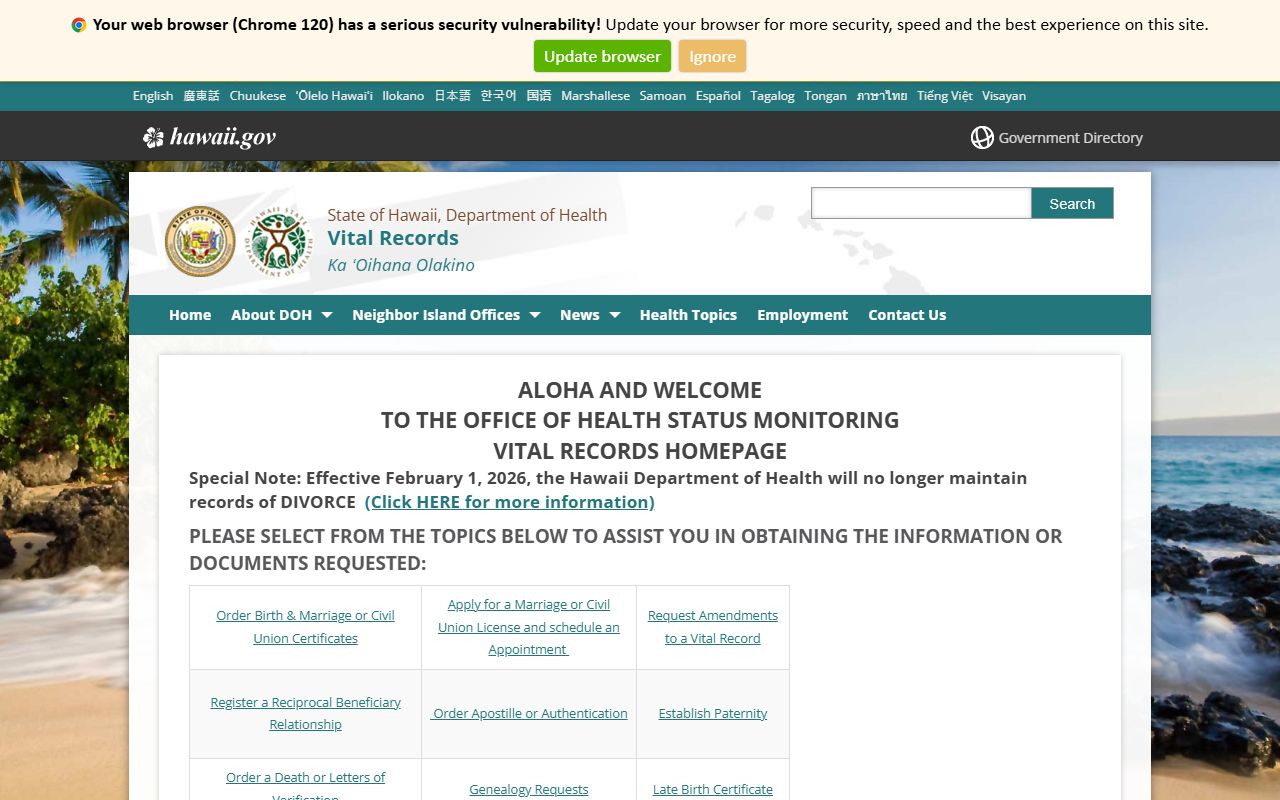
The DOH site lets you order records online or learn the steps to request genealogy copies of older documents.
Urban Honolulu Genealogy Requests
For researchers who need records older than 75 years, the DOH offers a specific genealogy request process. These older vital records are not restricted the same way current records are. Anyone can request them, but you do need to fill out the right form and pay the same fees that apply to regular certified copies. The genealogy page explains what counts as a qualifying record and how to submit a request by mail or in person. It also lists what ID or proof you may need to show. This process is useful for those tracing family lines from the early 1900s and before.
The screenshot below is from the Hawaii genealogy requests page, which guides researchers through ordering older vital records for Urban Honolulu family history work.
The Hawaii DOH genealogy requests page outlines how to access older vital records that are open to the public for Urban Honolulu family history research.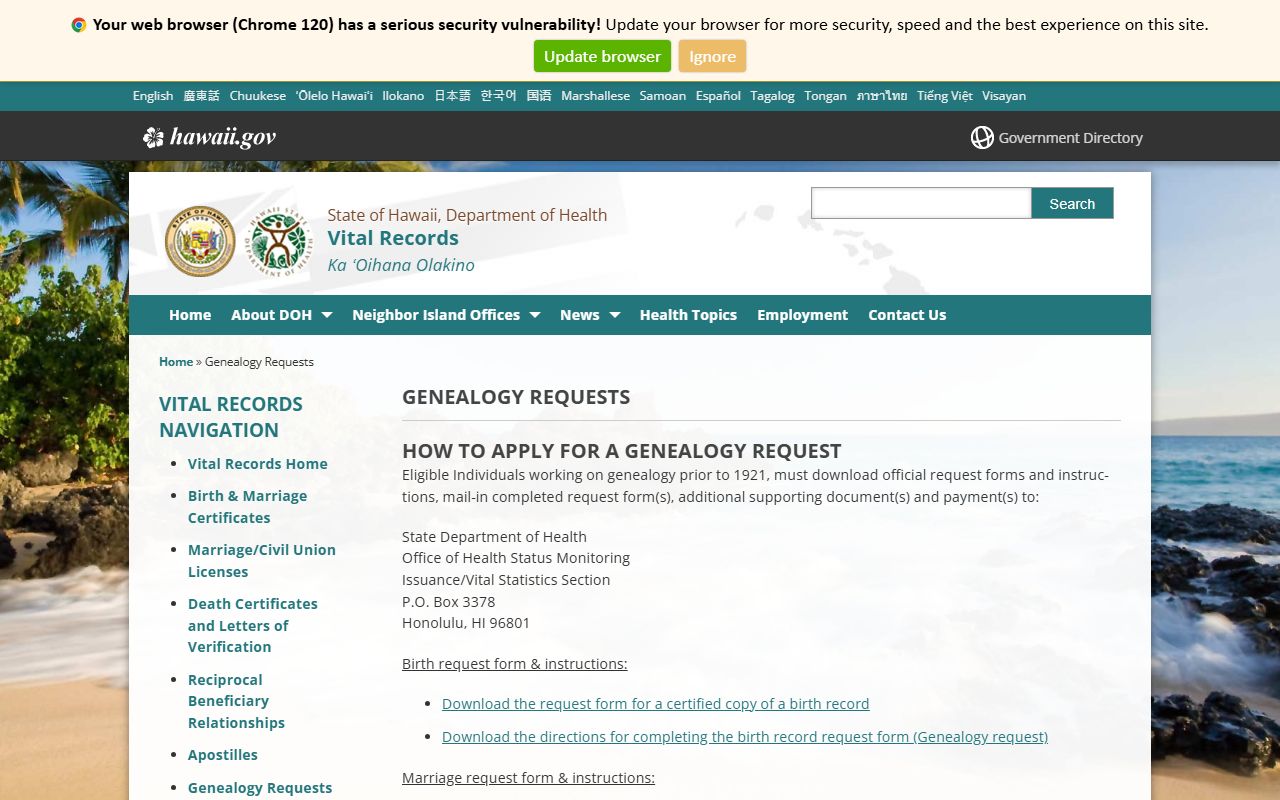
Use this page to find out which records are available for genealogy and what you need to send with your request.
Hawaii State Archives Records
The Hawaii State Archives, located at 367 South King Street on the Iolani Palace grounds in Honolulu, holds some of the oldest public records in the state. For Urban Honolulu genealogy research, the archives are essential. The phone number is (808) 586-0329. The archives hold Oahu birth records from 1852 to 1885 and death records from 1852 to 1873. These predate the DOH system by decades. Marriage records covering all Hawaiian islands run from 1826 to 1929. For court and probate research, the archives hold First Circuit probate records from 1847 to 1921, and First Circuit wills from 1893 to 1916. Court records from the First Circuit dating from 1839 to 1970 are also held here. The archives genealogy research guide is at ags.hawaii.gov/archives/about-us/genealogy-research-guide.
The digital archives collection is online at digitalarchives.hawaii.gov. Many documents have been scanned and can be viewed without a trip to the building. The digital collection includes land records, government documents, and some vital records. Researchers who cannot visit in person should check the digital portal first to see what is already available online before requesting copies.
First Circuit Court Records in Honolulu
The First Circuit Court handles all court filings for Honolulu County, which covers Oahu and the Urban Honolulu area. Current and recent court records can be searched through the eCourt Kokua system. You can search by party name or case number. Document copies purchased through the system cost $3 for regular copies and $5 for certified copies. The court records search page is at courts.state.hi.us/legal_references/records/search_court_records. As noted above, older First Circuit records from 1839 to 1970 are held at the State Archives rather than at the courthouse.
The screenshot below shows the First Circuit Court eCourt Kokua records search system used for Urban Honolulu genealogy and court records access.
The eCourt Kokua system allows online searches of First Circuit Court records relevant to Urban Honolulu genealogy cases, probate filings, and civil actions.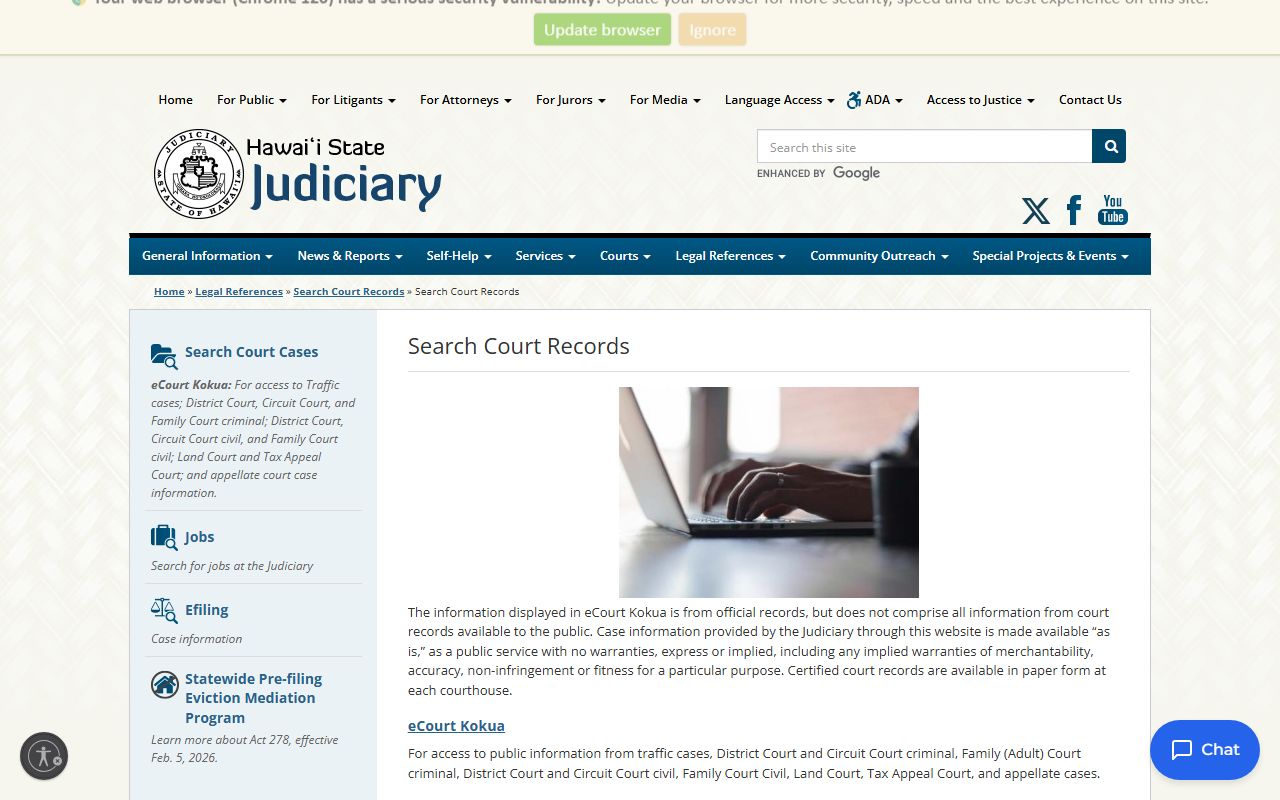
Use eCourt Kokua to find current court cases, probate filings, and other court documents tied to Urban Honolulu individuals and families.
Honolulu Land and Property Records
The Hawaii Bureau of Conveyances is based in Honolulu at 1151 Punchbowl Street, Suite 120. The phone is (808) 587-0147. The main website is at dlnr.hawaii.gov/boc. For genealogy purposes, land records are often overlooked but can be very useful. Grantor and grantee indexes at the Bureau of Conveyances go back to 1845. These indexes let you trace property ownership and find deed records tied to your ancestors. The bureau also holds Land Court records, which cover a separate system of land registration that began in the territorial period. One record type that is especially useful for genealogists is deeds of adoption, which were recorded here and can show family connections that do not appear in vital records.
Hawaii State Library Resources
The Hawaii State Library at 478 South King Street in Honolulu is another strong resource for Urban Honolulu genealogy. The phone is (808) 586-3535. The library website is at librarieshawaii.org. The library holds microfilm records including a birth index from 1909 to 1948, a death index from 1909 to 1949, and marriage indexes from 1909 to 1949. These are useful for finding record dates before ordering certified copies from the DOH. The library also offers free access to Ancestry.com on library computers, which is a significant resource since a personal Ancestry subscription can be costly. Newspaper indexes from 1929 to 1969 include obituaries, and newspaper content from 1989 forward is searchable electronically. Obituaries and marriage announcements in historical newspapers often fill gaps that official records do not cover.
FamilySearch Centers Near Urban Honolulu
There are several FamilySearch Family History Centers on Oahu that serve Urban Honolulu researchers. These centers offer free access to genealogy databases and microfilm collections. The locations and phone numbers are:
- Honolulu: (808) 955-8910
- Kalihi: (808) 845-9701
- Kaneohe: (808) 247-3134
- Laie: (808) 293-2133
- Mililani: (808) 623-1712
- Waipahu: (808) 678-0752
FamilySearch centers give you access to collections that are not freely available online, including microfilmed vital records, census records, and church registers. Staff at these centers can help guide your search, especially for Hawaiian-specific records. Note: Hours vary by location, so call ahead before visiting.
Bishop Museum Archives and Library
The Bishop Museum at 1525 Bernice Street in Honolulu holds archival and library collections that are especially valuable for research into Hawaiian families and Hawaiian royalty. The archives line is (808) 848-4182 and the library line is (808) 848-4148. The museum is open Tuesday through Saturday. The website is at bishopmuseum.org/research/library. Collections at Bishop Museum include genealogy manuscripts, records of the Hawaiian royal family, and documents related to Hawaiian land and culture. For those with native Hawaiian ancestry, the Bishop Museum is often one of the best places to find records that do not exist in government databases. Researchers should contact the archives in advance to schedule an appointment and confirm what materials are available for their specific research questions.
Ulukau Hawaiian Electronic Library
The Ulukau Hawaiian Electronic Library at ulukau.org is a free online resource that digitizes Hawaiian-language and historical documents. For genealogy, Ulukau includes marriage records from 1826 to 1929, probate records from 1847 to 1917, and naturalization records from 1844 to 1894. These collections overlap with what the State Archives holds on paper, but the online access makes them much easier to search. Ulukau is useful for anyone researching families from the Kingdom of Hawaii era. The site is searchable in both English and Hawaiian, which matters for older records that were often kept in the Hawaiian language.
Funeral Home Records in Honolulu
Funeral homes sometimes hold records that can help genealogists fill in gaps. In Urban Honolulu, several long-standing funeral homes may have historical records for families who used their services. These include Ballard Family Moanalua Mortuary, Borthwick Mortuary, Diamond Head Mortuary, Hosoi Garden Mortuary, Nuuanu Memorial Park and Mortuary, and Oahu Cemetery and Crematory. Funeral home records are not public records and access depends on each business. Some funeral homes will share information with direct family members. These records can include burial dates, names of next of kin, and other details not always found in official vital records.
Nearby Cities for Genealogy Research
Researchers working on Oahu family lines may also find records connected to nearby communities. These cities are part of Honolulu County and share the same court system and state record offices:
All of these cities fall within the same First Circuit Court jurisdiction, so court and probate records for any of them can be accessed through the same offices listed on this page.